
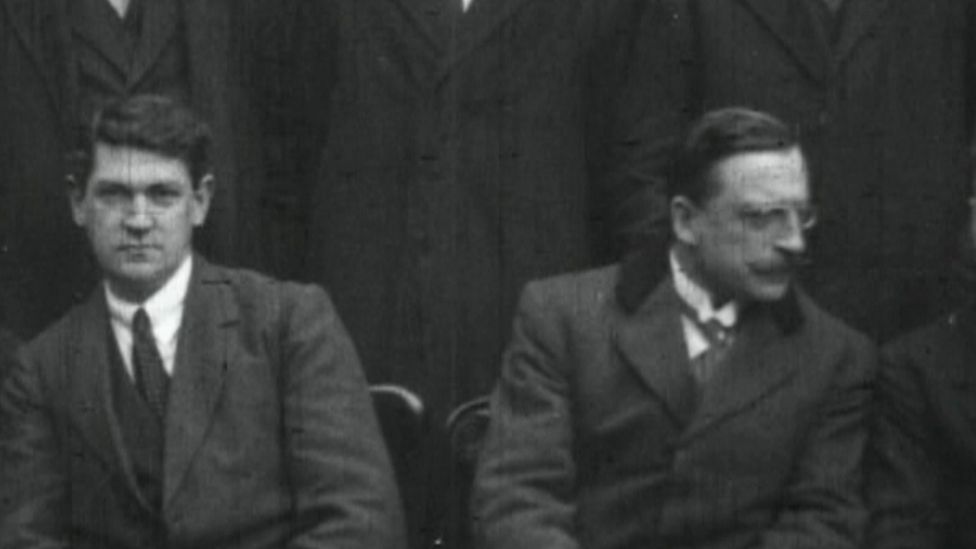
One hundred years ago, debates began in London and Dublin about whether to ratify the Anglo-Irish Treaty, which proposed a new Irish state.
Understand the rules and rules of สล็อตฝากวอเลท to play well, as each developer wants to create a unique online slot game format to attract players.
While most of the political focus was on arguments over the treaty in Dublin, an overwhelming number of MPs at Westminster backed it.
The vote - 401 to 58 - took place on Friday 16 December 1921, exactly 10 days after the agreement was reached at Downing Street.
The then Prime Minister David Lloyd George said: "No agreement ever arrived at between two peoples has been received with so enthusiastic and so universal a welcome."
The former Ulster Unionist leader Lord (Edward) Carson mourned the "break up" of the United Kingdom but the treaty had a quick and relatively smooth passage through Westminster, and was passed before Christmas.
In Dublin, the debate continued into the new year.
The Irish delegation at the London negotiations had been led by Arthur Griffith and Michael Collins.
When they arrived back in Dublin they were met by opposition among their Sinn Féin colleagues led by Éamon de Valera.
The agreement fell short of the 32-county independent republic which Sinn Féin had wanted. It kept Ireland within the British Empire.
The treaty was debated at a series of intense sessions in December and January in the Dáil, the Dublin parliament set up in 1919 in defiance of British rule.
Collins and Griffith argued that the treaty offered a pathway to full independence, and the re-unification of Ireland.